|
||||||||
Filament winding is a process used to make hollow polymer composite products. The filament winding process involves pulling a polymer fibre from a reel, passing it through a resin bath in order to soak the fibre in resin, then winding the fibre onto a shaft called a mandrel. In industry, filament winding is computer controlled so that the fibre filament is positioned precisely on the rotating mandrel. Often, two or more fibre strands are wound onto the mandrel at the same time, with each fibre hoop lying precisely next to the other.
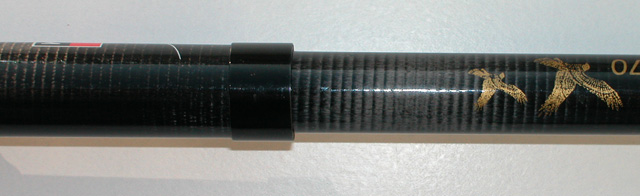
The tubes for this fishing rod were made by winding carbon fibres impregnated with resin onto a mandrel. Mandrels may be parallel cylindrical, tapered, bulbous or complex forms. Removal of the mandrel from complex forms may require destruction of the mandrel.
|
||||||||
| Click here to view the PDF version of this resource. | 
|
 |
||||||


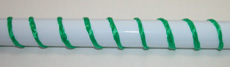 Filament winding, helical pattern