Expanded Polystyrene
Expanded polystyrene (EPS) is made from a spherical "sugar-like" substance called expandable polystyrene.
There are three stages in the conversion process of expandable polystyrene into expanded polystyrene.
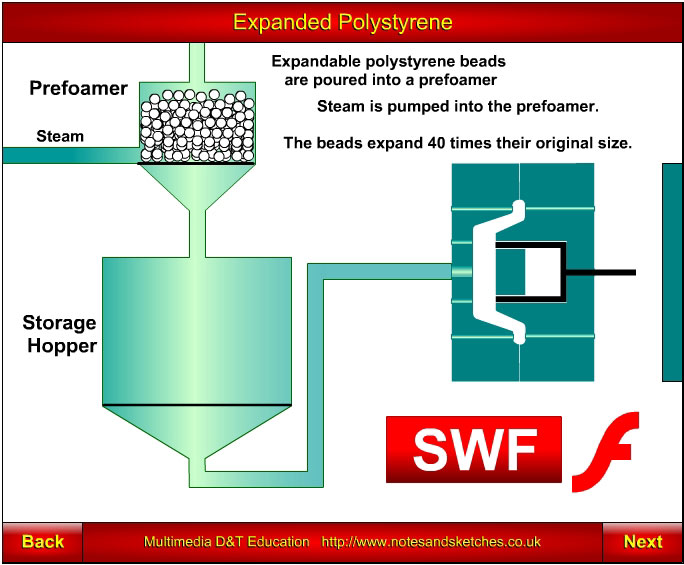
The first stage involves using steam to heat expandable polystyrene beads. The steaming process causes the beads to expand to about 40 times their original size. A blowing agent called pentane (a colourless flammable liquid used as a solvent) boils when heated by the steam and creates the closed cell honeycomb structure in the expanded beads.
The second stage involves leaving the expanded polystyrene beads to cool and to stabilise for about 12 - 24 hours.
The third stage involves transferring the beads to a mould and reheating them by injecting steam into the mould. The beads expand a further 10% and fuse together to form a rigid moulding. The expanded polystyrene moulding consists of about 98% air and 2% polystyrene.
The structure of expanded polystyrene makes it very light, shock absorbent, compression resistant and a good thermal insulator. This makes it an ideal material for protective packaging, for personal safety equipment such as cycle helmets and as an insulating material in countless applications but especially in the building industry where it is used under concrete floors and on walls etc.
|

 to view the animation in a new window.