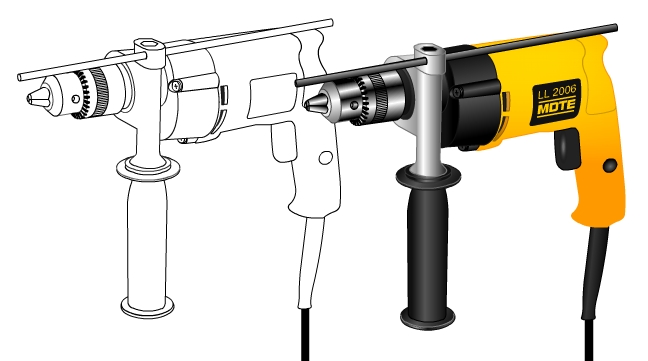
| Designers add colour to drawings to make them look more realistic. | ||||
 |
||||
Products are coloured for many reasons including,
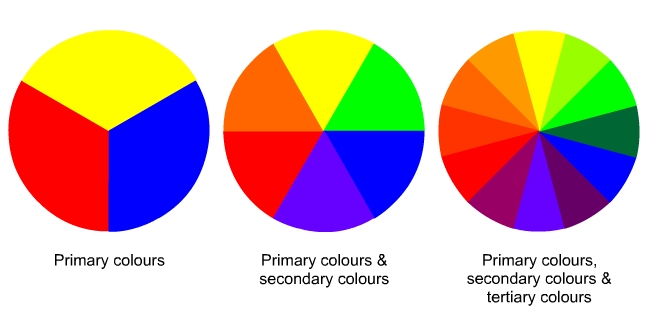
A colour may be applied to the surface of a material or it may go right through the material, as with many plastics. Colour may be applied using a paint, varnish, dye, or by heat treatment, by chemical action such as patination and by an electrochemical process such as anodising. There are three primary colours, red, yellow and blue. Primary colours cannot be made from other colours. Secondary colours are made by mixing any two of the primary colours together. The secondary colours are green, orange and violet. Tertiary colours are made by mixing a primary colour with a secondary colour. Tertiary colours are known by the colours that they're made from, i.e. red-orange, red-violet, yellow-orange, yellow-green, blue-violet and blue-green |
||||
 |
||||
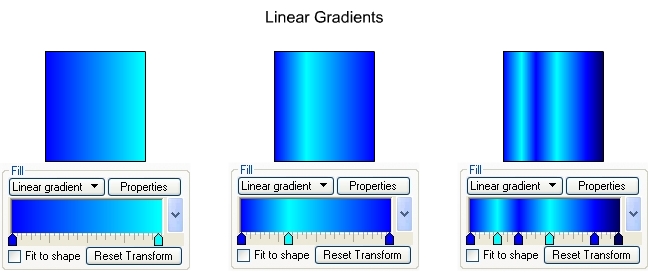
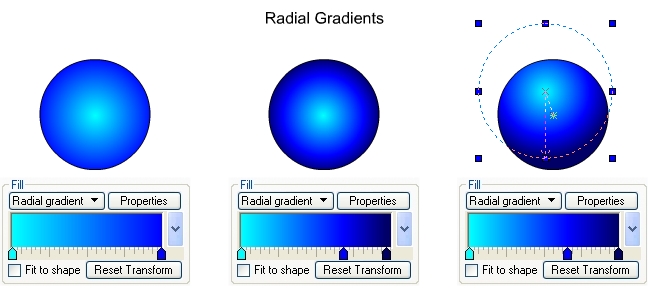
Colours that are close to each other on the colour wheel create harmony, colours at opposite sides create contrast. Colour gradients are gradual changes from one colour to another. Gradients are particularly useful because they can give the impression of light and shade on drawings. Gradients can be applied using any colouring medium by mixing colours but they are very easy to produce using the "Fill" tool in art and design software. Examples of linear gradient fills and radial gradient fills are shown below. |
||||
 |
||||
| The examples above show effects that may be achieved with two and three colour linear gradients. | ||||
 |
||||
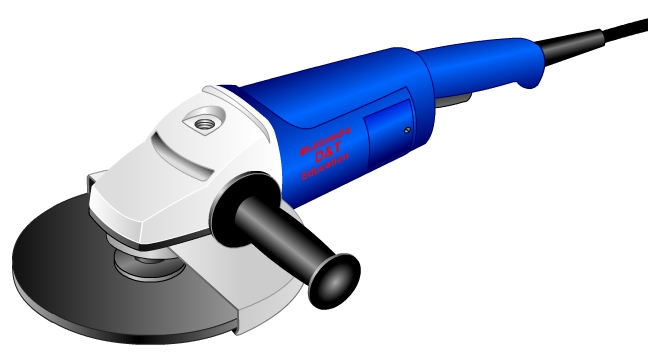
The examples above show effects that may be achieved with two and three colour radial gradients. The drawings of the angle grinder below and the drill above illustrate how linear and radial gradients may be used to colour (render) a line drawing. |
||||
 |
||||
|
||||