 |
|||
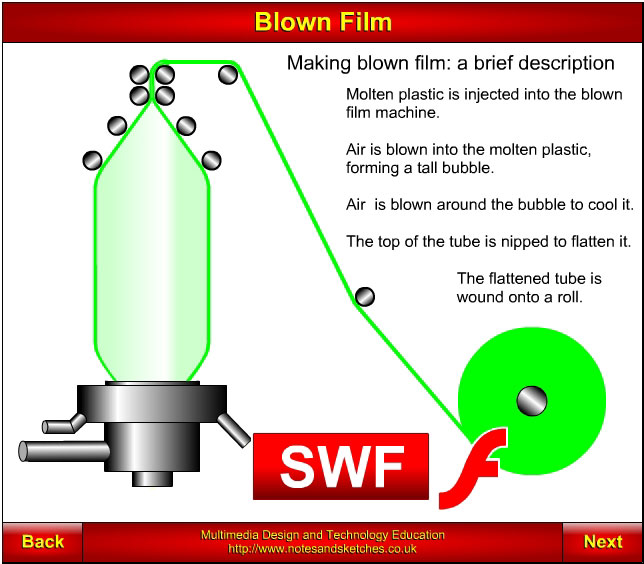
Click on the screenshot above to view the "Blown Film" animation by Laszlo Lipot |
|||
|
|||
The Blown Film processOne way of producing plastic film is by a process called "blown film". (Another method is calendering) The blown film process consists of injecting molten plastic into a blow film machine and blowing air through the molten plastic. This creates a bubble in the molten plastic, just like a person blowing a bubble in chewing gum. The bubble is blown vertically, creating a long bubble like a party balloon. Air is blown onto the outside of the balloon from a cooling ring at the base of the balloon. The air blown onto the outside, together with the air blown inside the balloon chills the balloon as the air rises. This cooling effect solidifies the plastic, creating the plastic film that we see used in carrier bags etc The top of the balloon is guided between rollers and then pinched to flattened the balloon. The flattened balloon is guided on rollers to where it is wound onto a reel. The flattened balloon of plastic is called "lay-flat tube". Lay-flat tube can be heat sealed and perforated to make plastic bags, or it can be slit to form sheets of plastic. Polyethylene (polythene) is the most common plastic used in blown film production. Low density polyethylene and high density polyethylene are suitable for blown film production but other materials such as polypropylene (PP) and Polyamide/Nylon (PA) are sometimes blended with polyethylene or used to produce multilayered laminates. |
|||
| Click here to view the PDF version of this resource. | 
|
 |
|

 to view the animation in a new window.