
This section is part of the KS3 Design and Technology software package.
More detailed information about Sustainability can be found in our Plastics Module.
Sustainable Materials
Sustainability is the ability to use resources indefinitely. The materials that we use should be:
This is because we are using some materials to the point where there is very little left in the world and a time will come when they will run out. |
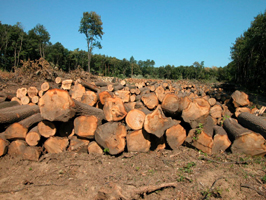 Oak trees being felled in a managed forest |
The timber and manufactured boards that we use should be from managed forests, i.e. forests that are replanted after harvesting. The managed oak forest in the photograph is harvested approximately every 80 years, then replanted with saplings.
Metals should be recycled. It is far cheaper to recycle metals than it is to dig the metals ores out of the ground and then convert them into the metals that we use to make products. Recycling has far less environmental impact than the conversion of metal ores into the metals.
There is little deterioration in metals over time so they can be melted and formed into new products. This uses less energy, produces less pollution and does not have leave big holes in the ground from mining processes.
Sustainable plastics are made from renewable sources such as wheat, corn, potatoes, grass and palm fibre. They are biodegradable so discarded products do not have a long term effect on the environment. Sustainable plastics can be composted as they are biodegradable.
On the other hand, plastics made from fossil fuels are non-biodegradable. Oil, the raw material from which most plastics are made, is non-renewable. Discarded or dumped waste plastics have a catastrophic and long term effect on the environment.
Sustainable Energy Sources
The main materials that are used to produce energy, coal, oil, nuclear fuel are non renewable. Coal and oil are running out and the environmental impact of mining operations for the raw materials for nuclear fuel is great. Their use produces pollutants that are dangerous to our health and poison the land, sea and air. It is believed by some, that it is pollutants that are causing climate change, resulting in extremes of weather, global warming and raising of sea levels.
Sustainable energy sources are renewable and do not tend to cause long term damage to the environment. The sustainable energy sources that are being developed today are:
|
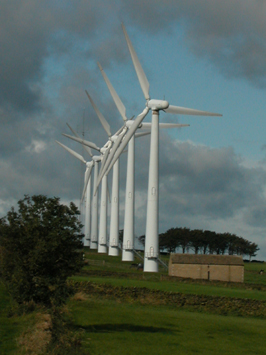 Wind farm on a hill top in Yorkshire |
Order now
The Sustainability section can be found on our KS3 D&T software and our Plastics Module.
KS3 D&T: Single User Licence £40; Site Licence £80
Plastics Module: Single User Licence £30; Site Licence £60
Look at the massive savings on software bundles
Download links will be emailed to you/your school within 24 hours of receipt of your order.